
GCSE Chemistry Calculations: Using Interleaving to Dominate Higher Tier Papers
GCSE Chemistry Calculations: Using Interleaving to Dominate Higher Tier Papers
If you're targeting grades 7-9 in GCSE Chemistry, you've probably noticed something: you can nail a mole calculation when you know it's coming, but you freeze when it pops up randomly in a past paper. This is why you need interleaving.
What Is Interleaving?
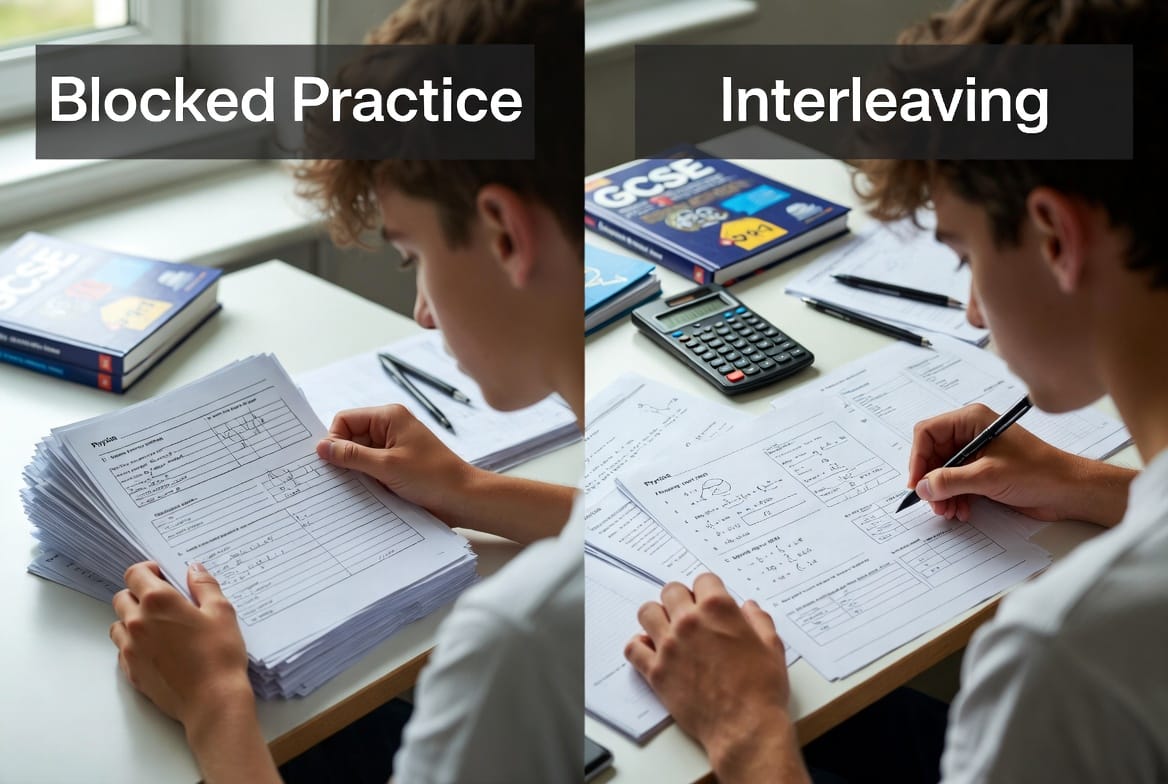
Interleaving means mixing different types of problems within a single revision session. Instead of spending an hour on just empirical formulas, you spend 15 minutes on formulas, then 15 on percentage yield, then 15 on concentrations.
Why It Works
Blocked practice (doing 20 of the same question) creates a "feeling of ease" that is misleading. In a real exam, there are no sections. Interleaving trains your brain to identify which method to use, which is the hallmark of a Grade 9 student.
How to start

Choose three calculation types.

Find 3-4 questions for each.

Shuffle them and work through them in a mixed order.

Pineapple Tuition






Join our newsletter here!
Pineapple Tuition
Join our newsletter here!
© 2025 Sophia Riaz-Condron